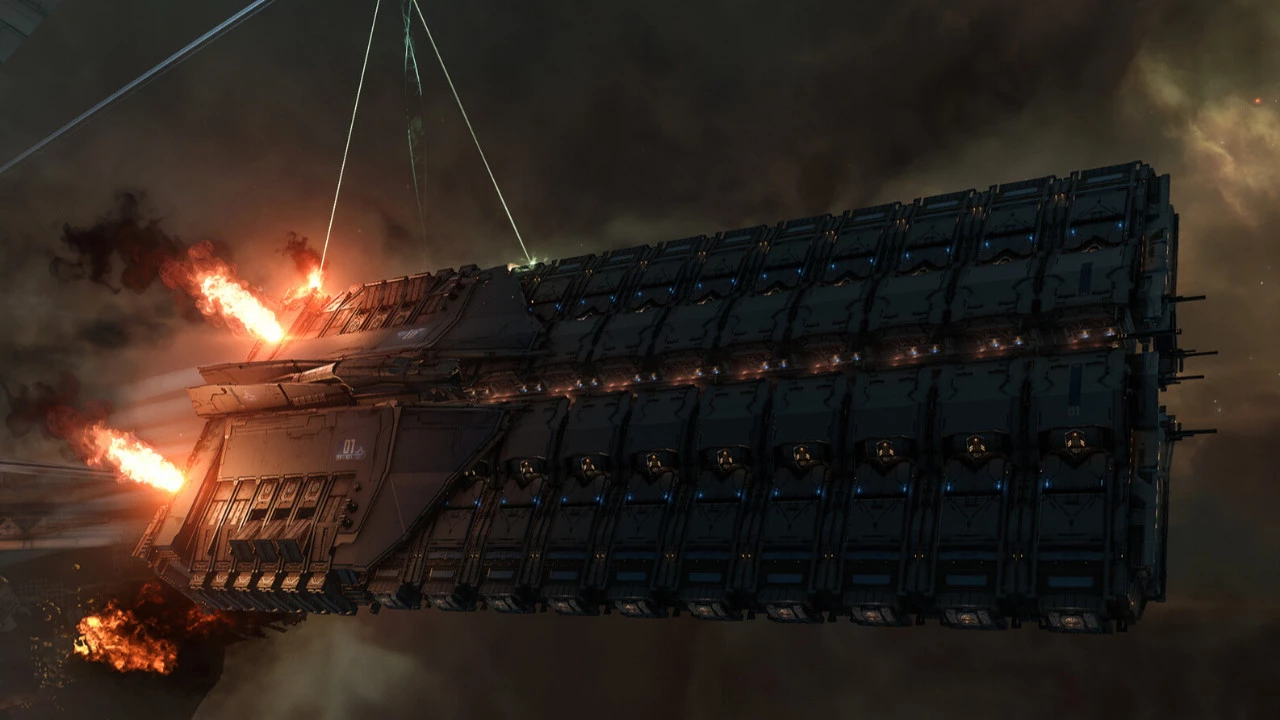
The universe of EVE Online has descended into chaos following the release of the highly anticipated Cradle of War expansion, with massive fleet engagements resulting in staggering losses measured in trillions of ISK — the game’s in-game currency that can be converted to real-world monetary value. The expansion, which introduced significant changes to territorial warfare mechanics and resource distribution, has ignited conflicts across multiple regions of the game’s vast galaxy, drawing in thousands of players from rival alliances and coalitions in what is shaping up to be one of the largest wars in the game’s history.
The scale of destruction in EVE Online is particularly noteworthy because of the game’s unique economic model. Unlike most multiplayer games, when ships and structures are destroyed in EVE Online, they are permanently lost, representing genuine investment of time, resources, and often real money. The trillions of ISK being destroyed in these battles can translate to tens of thousands of dollars in real-world value, making these virtual conflicts some of the most expensive in gaming history. Previous major conflicts, such as the legendary Bloodbath of B-R5RB in 2014, resulted in approximately $300,000 worth of ships and equipment being destroyed in a single battle.
The Cradle of War Expansion Reshapes the Galaxy
The Cradle of War expansion represents one of the most significant updates to EVE Online’s sovereignty and warfare systems in recent years. Developer CCP Games designed the expansion to shake up the established order in null-security space, where the most powerful player-run alliances have held territory for years. By introducing new mechanics that favor aggressive territorial expansion and making defensive structures more vulnerable during specific windows, the expansion has incentivized major coalitions to launch offensives against long-standing rivals. The changes have disrupted carefully maintained power balances that took years to establish, forcing even the most entrenched alliances to either adapt their strategies or face extinction.
EVE Online has maintained its reputation as one of the most complex and politically intricate massively multiplayer online games since its launch in 2003. The Icelandic-developed title features a single persistent universe where all players coexist, enabling emergent gameplay scenarios that have generated headlines worldwide. The game’s player-driven economy, political intrigue, and massive battles have been studied by economists and featured in academic papers. The current conflict follows in the footsteps of legendary wars like World War Bee and the Casino War, which saw massive shifts in territorial control and the rise and fall of major player organizations.
Coalitions Mobilize for Total War
Intelligence reports from various in-game news sources indicate that multiple major coalitions are now fully mobilized for what players are calling a total war scenario. The involved parties reportedly include some of the game’s most powerful and wealthy organizations, each commanding fleets worth hundreds of billions of ISK. These coalitions have spent years accumulating resources, building supercarriers, titans, and other capital ships that serve as the backbone of their military power. The current conflict threatens to deplete war chests that took years to build, as daily battles consume thousands of ships and untold quantities of ammunition, fuel, and other consumables.
The strategic complexity of warfare in EVE Online rivals that of real-world military operations. Alliances employ dedicated intelligence networks, diplomatic corps, logistics teams, and fleet commanders who coordinate thousands of players across multiple time zones. The current war has seen the deployment of spy networks, sabotage operations, and propaganda campaigns designed to undermine enemy morale. Communication platforms like Discord buzz with activity around the clock as players coordinate defense timers, plan offensive operations, and analyze enemy movements. For many participants, the game has become a second job, with dedicated players spending dozens of hours per week contributing to their alliance’s war effort.
The Economic and Cultural Impact of Virtual Warfare
The economic implications of the ongoing conflict extend beyond mere in-game statistics. EVE Online’s economy is closely watched by observers because it operates on principles similar to real-world markets. The destruction of vast quantities of ships and materials has already begun affecting market prices across the galaxy, with certain strategic resources seeing significant price increases. Manufacturers and traders are scrambling to meet the increased demand for warships and equipment, while speculators attempt to profit from market volatility. CCP Games employs a full-time economist to monitor and analyze these market dynamics, providing a unique window into how virtual economies respond to crisis situations.
As the war continues to escalate, players and observers alike are documenting the conflict for posterity. EVE Online’s community has a long tradition of creating detailed historical accounts of major wars, complete with battle reports, political analysis, and multimedia content. These records serve as a testament to the unique experiences that emerge from EVE Online’s sandbox design philosophy, where player actions shape the universe in ways that developers never explicitly planned. Whether this conflict will eventually rank among the game’s most legendary wars remains to be seen, but its scale and intensity suggest that the Cradle of War expansion has achieved its goal of reinvigorating EVE Online’s competitive landscape.
Expert Opinion: The timing of the Cradle of War expansion appears strategically calculated by CCP Games to reinvigorate veteran player engagement while the MMO market faces increasing competition. These massive conflicts typically result in significant subscription spikes and media attention, effectively serving as organic marketing. However, the risk remains that overwhelming losses could drive away casual players, potentially creating long-term retention challenges if the conflict persists beyond several months.