Style Ranking Systems Explained: How DMC and Bayonetta Grade Combat
How Devil May Cry's D-to-SSS style meter and Bayonetta's verse medals grade combat, what raises and drops a rank, and how it feeds mission scores.
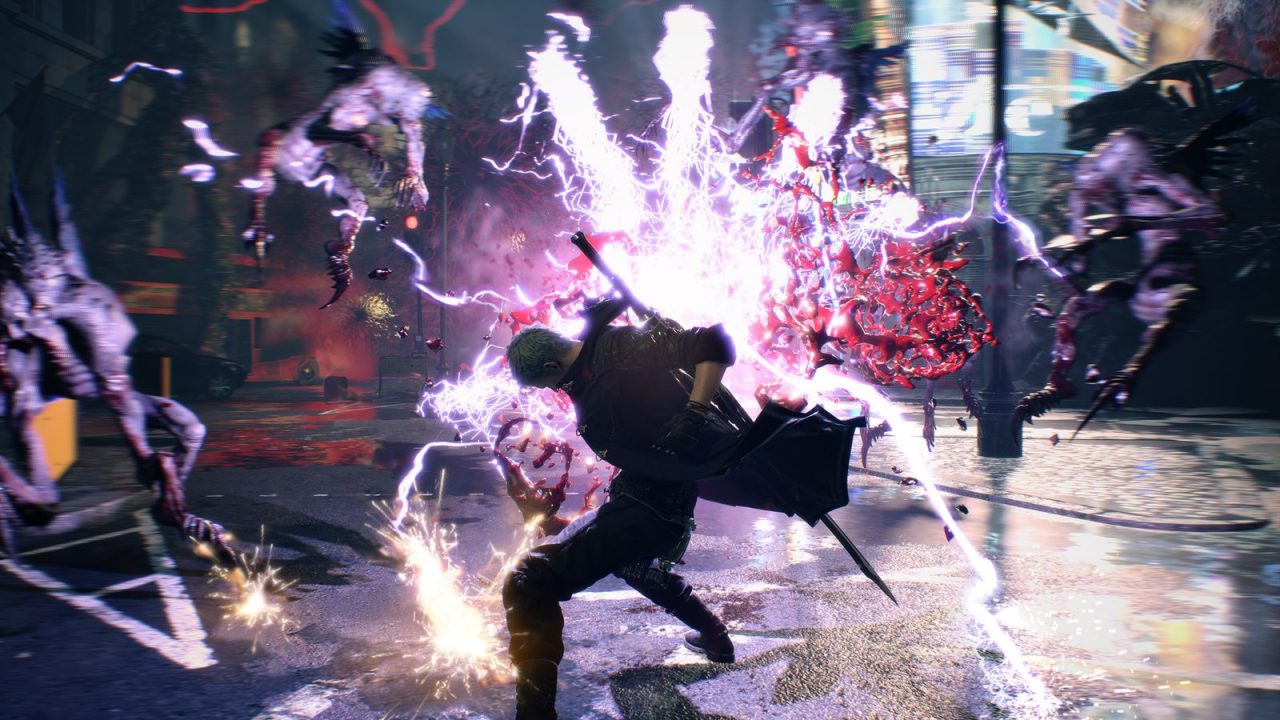
In most action games, you win a fight once the enemies are dead. Character action games add a second question: how well did you do it? A letter in the corner of the screen climbs while you fight well and drops the moment you get careless, and a medal or grade waits for you when the fight is over. These style ranking systems are some of the genre’s most recognizable features, and they influence how people play more than any other mechanic.
Below we cover the two best-known systems, Devil May Cry’s style meter and Bayonetta’s verse medals: how each one works, what raises and lowers your rank, how the grades feed into end-of-mission scores and what they reveal about the design goals behind each series.
Why Action Games Grade You at All
A style ranking does two jobs. The first is feedback: it tells you, in the moment, whether what you’re doing is what the designers consider good play. The second is motivation: a game that’s easy to finish becomes hard to master once a clean, high-scoring run is the goal. That gives the game replay value without new content. You replay the same mission to do it better.
The systems also steer behavior. If repeating one attack earned the same reward as a varied combo, most players would find the safest move and use it forever. A style meter makes variety and risk worth more than safe repetition, which pushes players to use the full moveset the developers built.
Devil May Cry’s Style Meter
The style meter has been part of Devil May Cry since the first game in 2001. A gauge appears as soon as you start hitting enemies and climbs through letter grades. The word attached to each letter changes from game to game, which has become a series tradition.
| Game | Ladder (lowest to highest) |
|---|---|
| Devil May Cry (2001) | Dull, Cool, Bravo, Absolute, Stylish |
| Devil May Cry 3 (2005) | Dope, Crazy, Blast, Alright, Sweet, SShowtime, SSStylish |
| Devil May Cry 4 (2008) | Deadly, Carnage, Brutal, Atomic, Smokin’, Smokin’ Style, Smokin’ Sick Style |
| DmC: Devil May Cry (2013) | Dirty, Cruel, Brutal, Anarchic, Savage, SSadistic, SSSensational |
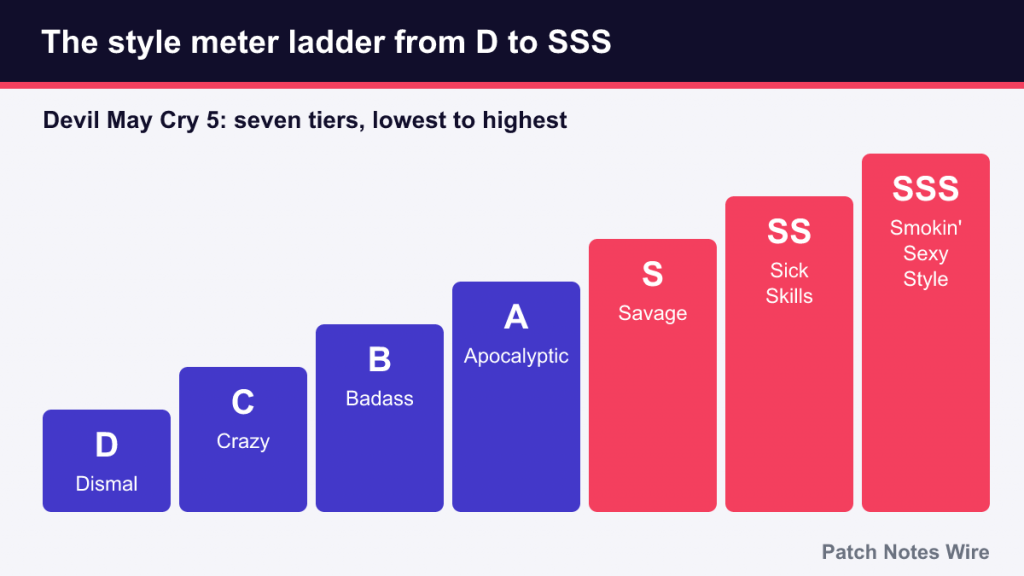
| Devil May Cry 5 (2019) | Dismal, Crazy, Badass, Apocalyptic, Savage, Sick Skills, Smokin’ Sexy Style |
From DMC3 onward, the meter has seven tiers that map to letter grades D, C, B, A, S, SS and SSS, which is why fans talk about “getting SSS.” The original game had five tiers, ending at S.
What raises the meter
The meter is fed by “style points” earned from attacks that connect and enemies you defeat. The details differ between games, but the principles stay the same:
- Variety. DMC3 rewards players who attack for a long time without repeating themselves and without getting hit. Using the same move again and again earns less style than mixing moves, weapons and styles. DMC5 encourages the same thing.
- Difficulty of the attack. Harder or riskier moves are worth more. Firing at a demon from across the room earns almost nothing, while a close-range combo that moves between melee and guns earns much more.
- Staying in the fight. The gauge slowly decays if you stop dealing damage, so long pauses or running around waste progress.
- Toolset switching. In games where characters switch weapons or styles in real time, such as Dante in DMC4 and DMC5, moving between tools mid-combo is the main way experienced players keep the meter high.
What drops the meter
The biggest penalty is getting hit. In the first game, taking damage reset the style rating to the bottom. DMC3 is a bit gentler: damage lowers the rating, and if you’re at “Crazy” or below, it resets. In DMC5, a single hit usually costs one or two tiers. Whatever the details, the lesson is the same. Defense is part of style, and a combo that ends with you getting hit isn’t stylish.
Repetition doesn’t drop the meter, but it slows it down. Spamming one move can leave you stuck at a low letter while the decay eats your progress.
From the Meter to the Mission Grade
The live style meter and the grade shown after a mission are related, but they aren’t the same thing. At the end of a mission, Devil May Cry gives you an overall rank built from several categories. In Devil May Cry 4, for example, the result screen grades you from D to SSS based on the time taken, red orbs collected, style points earned and items used. DMC5’s guides likewise note that the style you reach during a mission affects your final grade.
The practical result is that the mission grade rewards a combination of speed, efficiency and showmanship. A fast run with no style is limited, and so is a stylish run that took far too long or relied on healing items. The best ranks come from fighting well, quickly and without help.
The grade is mostly about pride and replay value rather than raw power. Higher difficulty modes and harder missions give the grade even more weight, because they’re what experienced players replay most. If you’re new to the series and wondering where to start, our Devil May Cry play order guide covers each game’s strengths.
Bayonetta’s Verse Medals
PlatinumGames’ Bayonetta, released in 2009 in Japan and 2010 in the West, comes from Devil May Cry creator Hideki Kamiya, and it takes a different approach to grading. Instead of one live meter, Bayonetta splits each chapter into separate fights called verses and awards a medal for each one.
The three categories
Each verse is judged on three factors:
- Combo score: the points earned from your combos during the fight.
- Time: how long the verse took.
- Damage: how much damage you received.
Each category gets its own grade, and those combine into the verse medal. The tiers run from Stone at the bottom (in the first two games) through Bronze, Silver and Gold, up to Platinum. Above Platinum sits Pure Platinum, the top result, which requires platinum-level performance in all three categories at once. In practice that means taking no damage. Even a small hit stops you from earning Pure Platinum for that verse. Bayonetta 3 keeps the same idea with Bronze, Silver, Gold, Platinum and Pure Platinum medals.
How combo score works
While you fight, the game builds a combo total from your hits, and stronger attacks add more points. A multiplier grows as the combo continues, so long, unbroken strings are worth much more than many short ones. The combo ends when you stop attacking for a few seconds or get hit, and the total is then banked. According to the Bayonetta Wiki, in Bayonetta 3 your combo score is the combo points times the multiplier, and finishing a combo also pays out a share of that score as currency, so fighting well speeds up your progress through the shop.
Witch Time plays a big part in the scoring. A last-second dodge slows enemies, giving you a window for free damage, and attacks during that window score extra. In Bayonetta 3, the Bayonetta Wiki lists Witch Time combo points at 1.5 times their normal value. Bayonetta’s scoring, in other words, rewards the same skill its combat is built around: dodging at exactly the right moment.
From verses to chapters
At the end of a chapter, the medals from all verses combine into a chapter rank. Using healing items like lollipops, or dying and continuing, lowers the chapter result. A strong player can therefore finish a chapter with Pure Platinum on most verses and still lose the top chapter award because of one item or one death. Bayonetta separates “how well did you fight” from “did you need help,” just as Devil May Cry’s item penalty does.
Devil May Cry vs Bayonetta: Two Philosophies
| Devil May Cry | Bayonetta | |
|---|---|---|
| Main unit | Whole mission, with a live meter | Each verse (fight), with a medal |
| Live feedback | Letter grade that climbs and falls during fights | Running combo total and multiplier |
| Main reward | Variety and staying unhit | Long combos, speed and staying unhit |
| Penalty for damage | Meter drops one or more tiers, or resets | Lower damage grade; no Pure Platinum |
| Other penalties | Items and time affect the mission grade | Items and continues lower the chapter rank |
Devil May Cry’s meter is about expression. It wants you to use as much of your moveset as you can and rewards switching tools. Bayonetta’s verse system is about execution under pressure. Long combos and Witch Time windows matter more than variety itself, and the separate damage category punishes every mistake on its own scale. Both arrive at the same idea from different directions: getting hit is the clearest sign that you weren’t in control.
Other Games That Grade Your Style
Many action games have borrowed the idea. Ninja Theory’s DmC kept the D-to-SSS ladder with its own words and tied higher grades to more upgrade rewards. Team Ninja’s Ninja Gaiden series tracks a Karma score that rewards efficient, skillful kills. Many later character action games, from big-budget releases to indies, use a letter-rank meter that every fan recognizes on sight. The details vary, but almost all of them reward the same three things: variety or skill, speed and avoiding damage.
How to Improve Your Grades
Whichever game you’re playing, a few habits help:
- Learn defense first. Every system punishes getting hit. Dodging, jumping and canceling out of attacks will raise your grade faster than any new combo.
- Build two or three reliable combos. In Devil May Cry, combine moves that look different and keep enemies juggled. In Bayonetta, use strings that extend into Witch Time.
- Avoid waiting. Long pauses let the style meter decay and add to your time. Stay close and keep pressure on enemies.
- Leave items for emergencies. They lower final grades in both series. Use them while learning, then try runs without them.
- Replay single missions or chapters. Both series are designed for this. Learning one fight at a time is far more efficient than replaying the whole game.
- Read the result screen. It tells you which category cost you the grade: time, damage, combo score or items.
Style terms like juggle, cancel and whiff are shared with fighting games, and our fighting game glossary defines many of them in plain English.
The Letter Is the Lesson
Style rankings can look like decoration, a flashy word in the corner of the screen. In practice they’re the clearest explanation of how the developers want the game played. Devil May Cry’s meter teaches variety and composure. Bayonetta’s medals teach precision and timing. If you chase the next letter or medal, you’ll end up learning the game the way it was designed to be learned.