God of War Series Guide: Play Order From the Greek Era to Ragnarok
Every God of War game in release and story order, from the PS2 originals and handheld entries to Ragnarok, Valhalla and the 2026 Sons of Sparta.
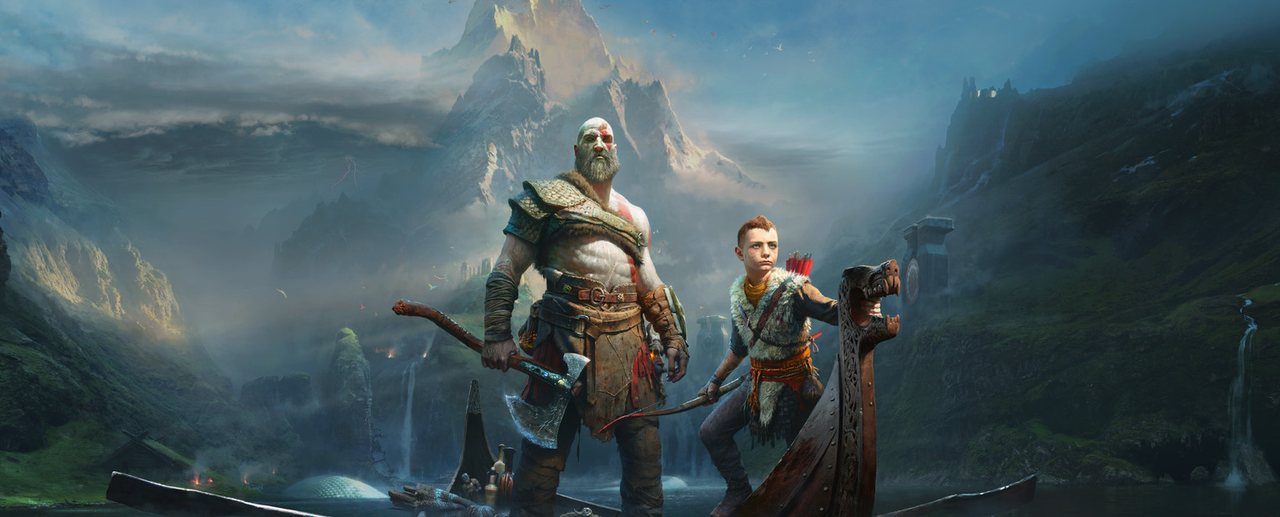
God of War has spent more than two decades as PlayStation’s flagship action series, and in that time it has reinvented itself at least once. The Greek-era games are fixed-camera hack-and-slash spectacles with enormous bosses; the Norse-era games are slower, heavier and shot from over Kratos’ shoulder. Between them sit two handheld games, a mobile spin-off, a Facebook Messenger text adventure, a roguelite epilogue and, as of 2026, a 2D platformer. This guide lists all of them, sorts them by release and by story, and explains how the combat changed when the series moved north.
Every God of War Game in Release Order
| Game | Release | Original platform |
|---|---|---|
| God of War | March 22, 2005 | PlayStation 2 |
| God of War II | March 13, 2007 | PlayStation 2 |
| God of War: Betrayal | June 20, 2007 | Mobile phones (Java) |
| God of War: Chains of Olympus | March 4, 2008 | PSP |
| God of War III | March 16, 2010 | PlayStation 3 |
| God of War: Ghost of Sparta | November 2, 2010 | PSP |
| God of War: Ascension | March 12, 2013 | PlayStation 3 |
| God of War: A Call from the Wilds | February 1, 2018 | Facebook Messenger (limited time) |
| God of War | April 20, 2018 | PlayStation 4 |
| God of War Ragnarok | November 9, 2022 | PlayStation 4, PlayStation 5 |
| God of War Ragnarok: Valhalla | December 12, 2023 | PlayStation 4, PlayStation 5 (free DLC) |
| God of War Sons of Sparta | February 12, 2026 | PlayStation 5 |
The 2018 game and Ragnarok also came to PC, in January 2022 and September 2024 respectively, with Valhalla included in the PC release of Ragnarok. Sony has additionally announced God of War Laufey for PS5, scheduled for February 16, 2027, and a remake of the original Greek trilogy that was described as being in early development when it was revealed in February 2026.
Chronological Story Order
Story order differs from release order mainly because of the prequels. Here is the in-universe sequence:
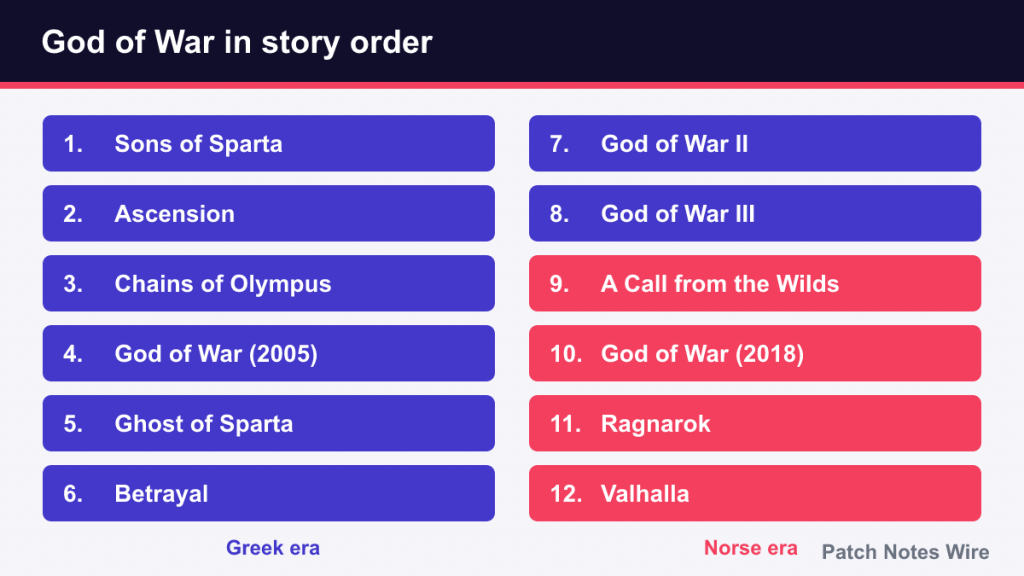
- Sons of Sparta – Kratos as a boy, training at the Agoge with his brother Deimos.
- Ascension – Kratos breaks his blood oath to Ares.
- Chains of Olympus – Kratos serves the gods during his ten years of penance.
- God of War (2005) – the original quest to kill Ares.
- Ghost of Sparta – Kratos searches for his brother.
- Betrayal – a short mobile side story.
- God of War II – Kratos turns against Zeus.
- God of War III – the end of the Greek saga.
- A Call from the Wilds – a text-based prelude starring Atreus.
- God of War (2018) – Kratos and Atreus in Midgard.
- Ragnarok – the conclusion of the Norse story.
- Valhalla – an epilogue in which Kratos confronts his past.
Which Order Should You Actually Play?
For almost everyone, release order is the better experience. The prequels were designed for players who already knew Kratos, and their reveals land harder that way. A practical route looks like this:
- The essential path: God of War (2005), God of War II, God of War III, God of War (2018), Ragnarok, then Valhalla. This covers the main arc in full.
- The completionist path: add Chains of Olympus and Ghost of Sparta after God of War II, Ascension whenever you like, and Sons of Sparta at the end as a look back.
- The modern-only path: start at God of War (2018). It was written so newcomers can follow it, and it is the most accessible place to begin if the PS2-era games feel too dated. Ragnarok includes recaps, but understanding Kratos’ history makes Valhalla far more meaningful.
Betrayal and A Call from the Wilds are essentially historical footnotes. Betrayal was a 2D mobile game for Java phones, and A Call from the Wilds ran for a limited time inside Facebook Messenger, so neither is practical to play now.
Where to Play the Greek-Era Games
This is the awkward part of the series in 2026. The PS2 and PSP games were collected on PlayStation 3 (God of War Collection, Origins Collection and God of War Saga), and God of War III received a PS4 remaster in 2015. Beyond that, availability depends on what PlayStation’s catalog services offer at any given moment, so check the current PlayStation Store or subscription listings before planning a run. The announced Greek trilogy remake may eventually make the originals easier to reach, but it had no release date at the time it was announced.
What Each Era Adds
The original trilogy (2005-2010)
The first God of War, directed by David Jaffe, established the template: the Blades of Chaos swinging on chains, light and heavy attack combos, magic spells, quick-time finishers and puzzles between fights. God of War II, directed by Cory Barlog, expanded the scale and the boss roster. God of War III, on PS3, pushed spectacle further than any game of its time, with Titans that were themselves levels.
The handheld and prequel games
Chains of Olympus and Ghost of Sparta, both developed by Ready at Dawn for the PSP, condensed the formula onto portable hardware with surprising faithfulness. Ascension, on PS3, added a multiplayer mode, a first for the series, and a “World Weapons” system for picking up enemy arms.
The Norse games (2018-2023)
The 2018 reboot, again directed by Cory Barlog, moved Kratos to Norse mythology and paired him with his son Atreus. Ragnarok continued and concluded that story, and the free Valhalla expansion added a replayable roguelite mode built on Ragnarok’s combat.
Sons of Sparta (2026)
Sons of Sparta was announced and released on the same day in February 2026. It is a 2D action platformer with pixel art, developed by Mega Cat Studios with Santa Monica Studio’s writers, in which a young Kratos fights with a spear and shield. Adult Kratos’ original voice actor, TC Carson, narrates.
How the 2018 Reboot Changed the Combat
If you play the series in order, the jump from God of War III to God of War (2018) is the biggest gameplay change you will encounter. Here is what changed and why it matters.
The camera
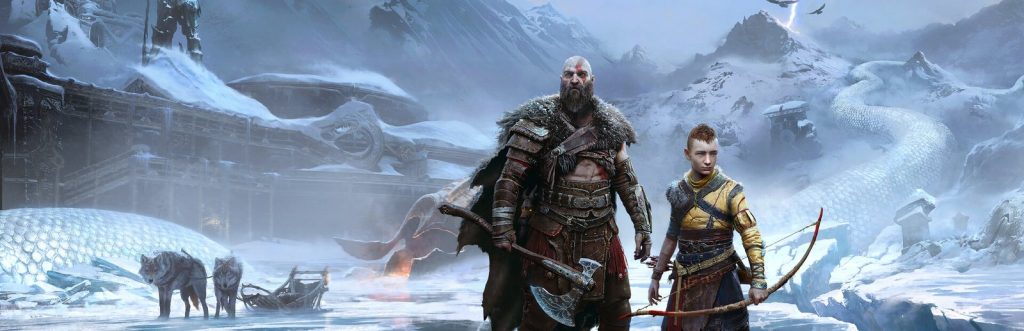
The Greek games used a fixed, director-controlled camera that pulled back to frame huge arenas and bosses. The 2018 game switched to a close, over-the-shoulder free camera and presented the whole adventure as one continuous shot with no cuts. That makes fights feel more intimate and heavy, but it also means enemies can attack from outside your view. The game compensates with on-screen indicators warning of off-screen attacks, and learning to read them is one of the first skills a returning player needs.
The weapons
The Blades of Chaos, with their wide sweeping arcs ideal for crowds, gave way to the Leviathan Axe. The axe can be thrown and then recalled to your hand, hitting enemies on the way back, which turns positioning and timing into part of every combo. The Blades return later in the 2018 game, and Ragnarok adds the Draupnir Spear. Switching between weapons to exploit elemental weaknesses (frost versus fire) is a core part of Norse-era combat.
Defense and pacing
The Norse games add a dedicated shield with blocks and parries, which encourages a more deliberate, counter-focused style compared with the Greek games’ constant aggression. Jumping was removed from regular combat, and fights take place on the ground with heavier, slower animations. Many players coming from the Greek trilogy initially find this sluggish; most come to appreciate the weight and impact it gives every hit.
Magic, rage and companions
The old blue-orb magic system was replaced with runic attacks on cooldown timers. Spartan Rage became a bare-handed brawling mode in the 2018 game, with more variants added in Ragnarok. Atreus fights alongside Kratos, firing arrows on command with a dedicated button, and in Ragnarok companions play an even bigger role.
Progression
The 2018 game introduced experience points, skill trees and crafted gear. This is where the series edges toward action RPG territory, though the moment-to-moment fights remain firmly action-focused.
Tips for Moving Between Eras
- From Greek to Norse: stop trying to keep enemies juggled in the air. The Norse games favor ground control, crowd management and weapon recalls. Use the shield more than you think you need to.
- From Norse to Greek: expect to be overwhelmed by crowds at first. The Blades’ long reach and evasive rolling are your main defensive tools, and magic is a resource to spend, not hoard.
- On difficulty: every era has a top difficulty for veterans. The Norse games’ hardest setting is called Give Me God of War, which significantly increases enemy aggression and damage.
- On boss fights: Greek-era bosses are spectacle set pieces with quick-time finishers; Norse-era optional bosses, such as the Valkyries, are tough tests of reading attacks and parrying.
If you enjoy the Greek games’ combo-driven style, the Devil May Cry series is a natural next step; our Devil May Cry play order guide covers where to start. If you like aggressive combat built on precise evasion instead, the Bayonetta series is worth a look.
Is God of War Still a Character Action Series?
This is a common debate. The Greek-era games are clearly part of the character action family alongside Devil May Cry and Ninja Gaiden, with combo-driven combat, juggling and an emphasis on spectacle. The Norse-era games borrow from third-person action adventures, with exploration, gear and a strong narrative focus. Their combat is still deep, especially at higher difficulties and in Valhalla’s challenge-focused runs, but it serves a different design goal. Neither style is better; they simply reward different players. That flexibility is a big reason the series has lasted so long.